
 ES

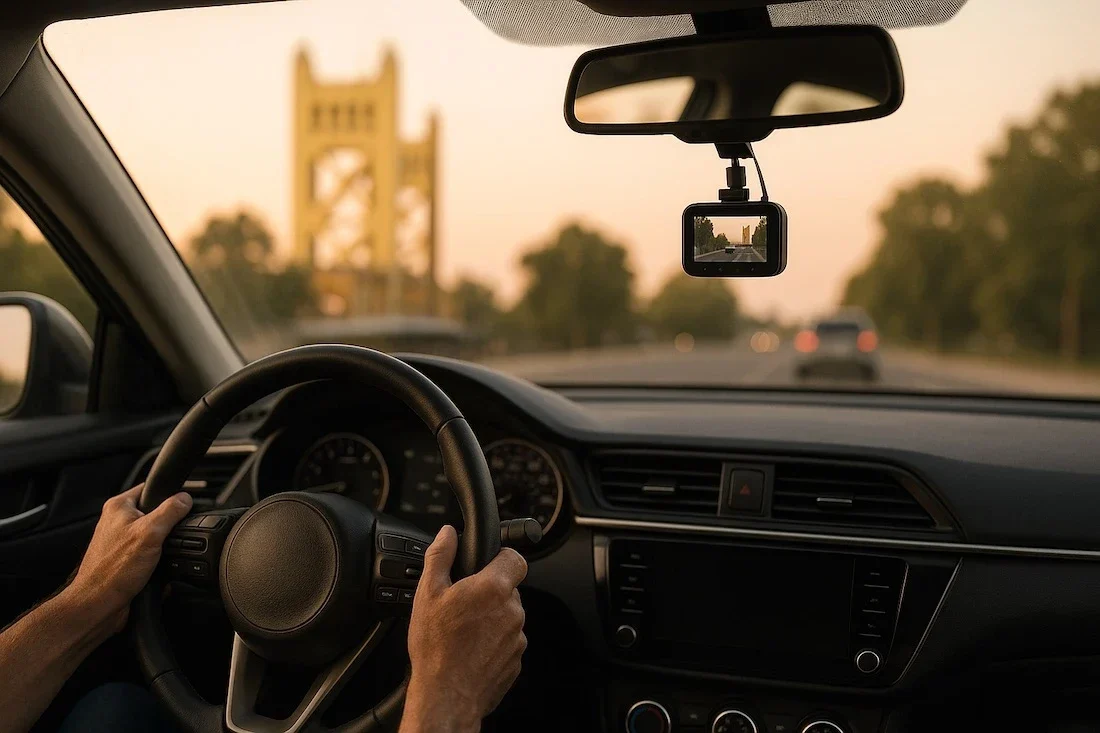
Why Dash Cams Matter in California Injury Claims
Dash cams have moved from novelty to everyday tool. Rideshare drivers, commuters, parents, and commercial fleets now rely on a small camera to tell a clear story when something goes wrong. In a California injury claim, clear video can shift a case from he said, she said to a documented sequence of events. This guide explains what your footage can prove, how to stay on the right side of California rules, and practical steps that protect the value of your claim.
What dash cam video can prove
A good recording helps answer three questions that insurers and juries care about.
What happened. Lane position, speed relative to traffic, turn signals, brake lights, headway distance, weather, and road surface are all visible.
Who had the right of way. Stop signs, red lights, yield signs, and pedestrian signals are often in frame. Even if the exact signal is not visible, cross traffic behavior and timing can support your version of events.
How serious the impact was. You can often see the moment of contact, vehicle movement, and airbag deployment. Audio, if recorded lawfully, can capture tire squeal or a second collision.
Video rarely tells the entire story on its own. It does, however, anchor witness statements, police diagrams, and physical evidence. The combined picture is what moves adjusters toward fair valuation.
California rules to know, simple and practical
You do not need a law degree to use a dash cam safely. Keep these points in mind.
Video in public spaces. Recording video of streets and public places is generally lawful in California. You can record what a person would be able to see from the driver seat.
Audio is different. California is an all party consent state for audio recording. Many dash cams record sound by default. If riders or passengers are in your vehicle, get consent or disable the microphone. The simplest approach is to turn audio off unless you clearly post a notice or you only drive alone.
Windshield obstruction. California limits objects that block the driver’s view. Mount your camera where it does not obstruct sight lines, typically tucked high near the rearview mirror with cables kept tidy. Check California Vehicle Code 26708 for placement specifics and follow your manufacturer’s instructions.
Privacy and sharing. Do not publish license plates or faces on social media. If you must share publicly, blur sensitive details. Sharing raw footage online can also hand insurers arguments to use against you.
If you have any doubt, ask a lawyer before sharing video with anyone except your medical team and your attorney.
What to do after a crash if you have footage
Your priority is safety and medical care. Once immediate needs are covered, secure the video.
Preserve the original card. Eject the microSD card, label it with the date and the vehicle, then place it in a small envelope. Treat this as evidence.
Make a working copy. Copy files to a computer and to a cloud folder. Do not rename the original files. Keep the folder structure the camera created.
Record the chain of custody. Write a simple note with the date and time you removed the card, who handled it, and where the card is stored.
Do not edit. No trimming, no adding captions, no speed changes. If you need to share clips, export a copy, and keep the original untouched.
Capture context. Photograph the camera mount location, the street signs near the scene, and any damage patterns.
Tell your lawyer quickly. Time matters. Nearby businesses often overwrite surveillance footage within days. Your lawyer can send preservation letters before video disappears.
How your lawyer obtains more video
Your dash cam is one source. Other sources can fill gaps.
Nearby businesses and homes. Doorbell cameras, gas stations, and storefronts often capture collisions. Your lawyer can send a spoliation letter that asks the owner to save video before it is overwritten.
Transit and government cameras. Buses, light rail, and traffic agencies may have recordings. Access depends on policies and timing, so early requests help.
Other vehicles. Commercial trucks and rideshare vehicles may have interior or exterior cameras. In litigation, that footage can be requested and, if necessary, compelled.
The sooner counsel is involved, the wider the circle of available video.
Chain of custody, in plain English
Courts care about whether a video is authentic, unaltered, and accounted for during its lifetime. You do not have to create a complex log. A simple record works.
Where the camera was mounted.
The brand and capacity of the card.
The date and time you removed the card.
Who handled the original and any copies.
Where the original card is stored.
If you email or upload the video, keep the sent messages or file history. This helps your attorney lay a clean foundation if the video is presented in court.
Common insurer arguments and how to counter them
Insurers often try to minimize the value of video. Expect these points and know how your team responds.
Limited field of view. A front camera might miss a side impact. Combine the footage with photos of damage patterns to show direction and force.
Frame rate and blur. Fast motion can smear. Your expert can slow frames and stabilize the image to clarify key moments, without altering content.
Lens distortion. Wide angle lenses bend lines. Your expert can correct distortion for measurement and perspective.
Partial clip. If the clip starts too late, an adjuster might say you brake checked the other driver. Preserve the moments before and after the crash and add witness statements to fill context.
Contributory fault. In California, comparative fault can reduce recovery. Video that shows reasonable driving and prompt reactions helps limit that argument.
Quality evidence plus prompt preservation is the best answer to each tactic.
Dash cam buying tips for California drivers
You do not need the most expensive camera, you need a reliable one that records clear, stable video.
Resolution and dynamic range. 1440p or 4K is ideal. Look for good low light performance and wide dynamic range for sunrise, sunset, and nighttime glare.
Field of view. Around 130 to 150 degrees is a sweet spot. Ultra wide images can distort edges and reduce plate readability.
Dual channel. A rear camera is valuable for rear end impacts and brake check claims. A cabin camera can help rideshare drivers, just respect audio consent rules.
GPS and speed overlay. Coordinates and speed help reconstruct events. Keep GPS on, and let your lawyer decide what to show.
G sensor and parking mode. Automatic event locking protects files after a shock. Parking mode can catch hit and run damage.
Capacitor power. Capacitors handle heat better than internal batteries, helpful in hot California summers.
Cloud or Wi Fi transfer. Automatic backup reduces the risk of losing evidence when the card fails.
Mount high near the rearview mirror, route cables along trim, and keep the lens clean. Test a short drive and check plate readability before you rely on it.
Mistakes to avoid
Overwriting the card. Loop recording can erase your crash within hours. Remove the card as soon as you are safe.
Posting to social media. Public posts can be misinterpreted. Share with your attorney first.
Sending your only original. Ship a copy, not the original card. If a lab needs the original, deliver it in person or by trackable courier and log the transfer.
Arguing at the scene about the video. Stay calm. Exchange information and wait to show your video to your lawyer.
Ignoring minor pain. Video helps prove fault, medical records prove damages. Get evaluated, even if you feel okay.
If the other driver has a dash cam
Do not confront the other driver about their footage. Your lawyer can request it through the claims process, and a court can compel production in litigation. If the other driver claims the video was lost, early preservation letters and witness statements help counter that claim.
Step by step checklist after a collision
Call 911 if anyone is hurt, and move to a safe location if you can.
Photograph vehicles, plates, the intersection, debris fields, and skid marks.
Ask for names and phone numbers for witnesses.
Note nearby cameras, doorbells, and businesses.
Remove and secure the dash cam card.
Back up the files to two locations, computer and cloud.
Write a short chain of custody note.
Seek medical evaluation, even for mild symptoms.
Call Phoong Law for a free case review and rapid evidence preservation.
Short FAQ
Are dash cams legal in California
Yes, video recording of public roads is generally lawful. Follow windshield obstruction rules, and be careful with audio recording since California requires consent from all parties.
Do I have to give my video to the insurance adjuster right away
You can tell the adjuster that you have video, then speak with a lawyer before sharing copies. Your attorney may provide the video at the right time and with the proper context.
Can a video ever hurt my case
Yes, a partial or low quality clip can be misleading. That is why you should preserve the full file, avoid editing, and let your lawyer present it with other evidence.
What if the impact happened at night
A camera with good low light and wide dynamic range can still help. Headlights, brake lights, and traffic signals provide timing cues even when fine detail is limited.
How long do businesses keep their footage
Some overwrite within 24 to 72 hours. Quick legal requests matter. Call counsel as soon as possible.
Final thought and invitation to talk
A dash cam is like an extra witness who never forgets. It captures the small details that turn confusion into clarity. If you have been in a crash, or you simply want to prepare before something happens, a little planning goes a long way. Choose a reliable camera, mount it correctly, and know how to preserve files. If a collision occurs, call us early so we can secure your evidence and protect your rights.
Questions or next steps
Call 866-GOT-PAIN, or reach us through the contact page for a free, confidential case review. Bring your memory card if you have one, we will make a secure copy and walk you through the next steps.
Disclaimer: This article is for general information only and does not create an attorney client relationship. Laws change, and rules on recording and privacy vary by location. Do not rely on this post for legal advice. Speak with a qualified attorney about your specific situation before taking action.













 English
 Español de México