
 ES


When a Child Can’t Tell You What Happened at School: Who Protects Nevada’s Most Vulnerable Students?
Parents send their children to school with an expectation that goes far beyond education. They expect their children to be safe.
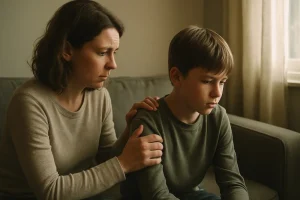
For parents of non-verbal children and children with disabilities, that trust can carry even greater weight. A child who cannot easily describe what happened during the school day may not be able to tell a parent that someone frightened them, hurt them or treated them improperly. Parents may instead be left trying to interpret changes in behavior without knowing what caused them.
A recently filed federal lawsuit in Las Vegas has brought that problem back into focus and renewed questions about how Nevada protects some of its most vulnerable students.
Phoong Law represents a Las Vegas mother who filed a lawsuit on behalf of her non-verbal pre-kindergarten son following alleged mistreatment at Hickey Elementary School. The allegations are now part of ongoing litigation, and they raise a broader question that affects families throughout Nevada: When a child cannot tell a parent what happened inside the classroom, what safeguards are in place to protect that child?
What Is Alleged to Have Happened at Hickey Elementary School?
According to recently reported allegations in the federal lawsuit, the child attended a special education classroom at Hickey Elementary School in Las Vegas. The complaint alleges that a teacher physically and verbally mistreated students, including the plaintiff’s non-verbal pre-K son.
The lawsuit alleges that teacher assistants described conduct that included flicking, grabbing, pulling and dragging students. With respect to the child represented by Phoong Law, the allegations include being flicked on the head and yelled at.
The complaint further alleges that the child’s behavior changed. He allegedly began resisting going to school, crying when entering the classroom and displaying aggressive behavior toward other children.
The lawsuit also raises questions about when school administrators became aware of the alleged conduct and whether appropriate reports and interventions occurred.
The teacher has said she was cleared of wrongdoing following internal investigations. The allegations in the lawsuit have not been established as fact by a court, and the litigation remains ongoing.
But regardless of the eventual outcome of this particular case, it highlights a difficult problem faced by parents of children who may not be able to explain what happens to them during the school day.
What Should Parents Do If a Non-Verbal Child Suddenly Becomes Afraid of School?
A sudden behavioral change does not necessarily mean that a child is being abused or mistreated. There can be many reasons a child becomes anxious about school, changes behavior or begins resisting a familiar routine.
However, unexplained behavioral changes can be a reason for parents to start asking questions, particularly when a child has limited ability to communicate what is wrong.
Changes worth paying attention to may include sudden resistance to going to school, unusual fear associated with a particular classroom or individual, unexplained crying before or after school, changes in sleep, increased aggression, withdrawal, unexplained injuries or a significant change in behavior that appears connected to the school environment.
Parents know their children’s routines and behaviors better than almost anyone. When something changes dramatically without an obvious explanation, it may be appropriate to document what is happening and ask the school for information.
The important distinction is that a behavioral change can be a warning sign, but it is not by itself proof of abuse.
Are Nevada School Employees Required to Report Suspected Child Abuse?
Yes. Nevada law imposes reporting requirements on school employees and volunteers under specified circumstances.
Under Nevada Revised Statutes 392.303, a school employee or volunteer who knows or has reasonable cause to believe that a child has been subjected to abuse or neglect by another school employee or volunteer must make a report to the appropriate child welfare agency and a law enforcement agency.
The statute requires the report to be made as soon as reasonably practicable and no later than 24 hours after the person knows or has reasonable cause to believe that the child has been subjected to abuse or neglect.
That requirement is particularly important in a school environment because another adult may witness or learn about conduct that the child’s parents have no way of seeing themselves.
Does a Nevada School Employee Have to Prove Abuse Before Reporting It?
No. The reporting standard is not the same as the standard required to prove liability in a lawsuit or guilt in a criminal proceeding.
Nevada’s school reporting law refers to an employee or volunteer who “knows or has reasonable cause to believe” that a child has been subjected to abuse or neglect.
In practical terms, the law does not require an individual school employee to conduct a complete investigation and determine conclusively that abuse occurred before making a required report.
That distinction matters. Investigating an allegation and determining what actually happened are different from deciding whether circumstances have reached the point where a report must be made.
What Can Parents Do If They Suspect Their Child Is Being Mistreated at School?
Parents who notice concerning changes can begin by documenting what they observe. Write down when the behavior started, what changed, what the child appears to react to and any injuries or unusual incidents.
Parents should also preserve communications with teachers, aides and administrators. Emails, text messages, school notices, incident reports and other communications can help establish a timeline later if questions arise about what happened and when school personnel became aware of a concern.
When communicating with the school, parents may want to ask specific questions rather than simply asking whether everything is okay. Ask whether any incidents occurred, whether the child’s behavior changed in the classroom, whether staff members documented concerns and whether any reports were made.
If there is reason to suspect abuse, parents can also report those concerns to the appropriate authorities rather than relying exclusively on an internal school investigation.
When a situation involves potentially serious physical or emotional harm, speaking with an attorney can also help parents understand what information should be preserved and what legal options may be available.
Does Nevada Require Cameras in Special Education Classrooms?
Nevada does not currently have a statewide requirement that special education classrooms be equipped with cameras of the type contemplated in previous proposed legislation.
In 2023, Nevada lawmakers considered Senate Bill 158, legislation addressing video cameras in certain public school special education classrooms.
Under the amended proposal, a parent or legal guardian of a qualifying student could request that recording equipment be installed in certain classrooms where students receive special education for a substantial portion of their school day. The proposed cameras would have been capable of recording sound as well as video.
The proposal also included rules governing when recording could occur, notification requirements and restrictions concerning access to recordings.
The legislation did not ultimately become Nevada law.
The issue, however, has not disappeared.
Would Classroom Cameras Allow Parents to Watch Their Children All Day?
The camera proposal previously considered by Nevada lawmakers was not designed to create an unrestricted livestream that parents could monitor throughout the school day.
SB 158 contemplated controls over how recordings would be made, retained and released. It also included notice requirements intended to make teachers, staff members and families aware that recording equipment was present.
That distinction is important because the debate over classroom cameras involves legitimate interests on multiple sides, including student privacy, employee privacy, cost and the protection of vulnerable children.
The question is not necessarily whether classrooms should become publicly viewable spaces. A more focused question is whether an objective record should exist when a serious allegation arises involving a child who may be unable to describe what happened.
Why Could Cameras Be Especially Important for Non-Verbal Students?
Consider what normally happens when a verbal child experiences something frightening at school.
The child may come home and tell a parent, “My teacher grabbed me,” “someone hurt me” or “I’m scared of going back.”
That conversation can give the parent somewhere to begin.
A non-verbal child may not have that option.
The first indication that something is wrong may instead be crying before school, resisting a particular classroom, acting aggressively, becoming withdrawn or displaying other unexplained behavioral changes. The parent can see the effect without necessarily knowing the cause.
That creates an accountability gap.
A properly regulated recording system could potentially provide objective evidence when accounts conflict or when the person most directly affected cannot describe the incident.
Cameras would not replace qualified teachers, attentive aides, responsible administrators, mandatory reporting requirements or parental involvement. Nor would a camera prevent every inappropriate act.
But when a serious allegation arises, a recording may help answer a question that otherwise can become extremely difficult to resolve: What actually happened in that classroom?
What Happens If a School Fails to Protect a Special-Needs Student?
The answer depends heavily on the facts of the individual case.
Suspected abuse or mistreatment in a school can potentially result in internal school investigations, involvement by child welfare authorities, law enforcement investigations, employment actions and civil litigation.
Different legal claims may also arise depending on who allegedly committed the conduct, what school officials knew, what actions they took and whether the student suffered harm.
In the Hickey Elementary case, the lawsuit includes allegations against the teacher and school administrators and asserts claims including battery and negligence. The plaintiffs have requested a jury trial.
Those allegations will now proceed through the legal process.
Can Parents Sue a School District If Their Child Is Abused at School?
Potentially, but claims involving public schools can be considerably more complicated than ordinary personal injury cases.
The available claims depend on the circumstances, including who caused the alleged harm, whether other employees or administrators knew about a dangerous situation, what steps were taken in response and whether applicable policies or legal duties were followed.
Cases involving a government entity may also involve procedural requirements, defenses and deadlines that differ from claims against a private individual or business.
For that reason, parents who believe a child has suffered serious mistreatment at school should consider obtaining legal advice specific to their circumstances rather than assuming the rules are the same as those governing another type of injury claim.
Why Phoong Law Is Calling for Another Look at Classroom Cameras
Phoong Law represents the family in the Hickey Elementary litigation, but this case raises an issue that extends beyond a single child, teacher or school.
Attorney Anh Phoong believes Nevada should revisit legislation addressing cameras in special education classrooms, particularly classrooms serving children who may have difficulty communicating what happens to them.
The objective is not to replace educators or treat every teacher as a potential wrongdoer. Nevada has dedicated special education professionals doing difficult and important work every day.
The concern is what happens when something does go wrong.
A verbal child may be able to describe an incident immediately. A non-verbal child may not be able to do so at all. In those circumstances, parents, responsible educators and investigators may all benefit from having objective information available.
Protecting children should not depend on whether a child has the ability to come home and explain what happened.
Frequently Asked Questions About Suspected School Abuse in Nevada
Are Nevada teachers mandatory reporters of suspected child abuse?
Yes. Nevada law establishes reporting obligations for school employees and volunteers who know or have reasonable cause to believe a child has been subjected to certain forms of abuse or neglect.
How quickly must suspected abuse by a school employee be reported?
Under NRS 392.303, a required report must be made as soon as reasonably practicable and no later than 24 hours after the employee or volunteer knows or has reasonable cause to believe the child was subjected to covered abuse, neglect or other specified conduct.
Does a teacher have to prove abuse before reporting it?
No. The Nevada statute uses a “reasonable cause to believe” standard. The person making the report is not required to conclusively establish that abuse occurred before fulfilling the reporting obligation.
What should I do if my non-verbal child suddenly becomes afraid of school?
Document the behavioral change and when it began, communicate with the school, ask specific questions about incidents or changes observed in the classroom and preserve relevant communications. A sudden change does not prove abuse, but significant unexplained changes can warrant further investigation.
Does Nevada require cameras in special education classrooms?
No statewide camera requirement of the kind proposed in SB 158 is currently in effect. Nevada lawmakers previously considered legislation addressing cameras with audio capabilities in certain special education classrooms.
Would parents automatically have access to classroom recordings?
Not under the framework previously proposed in SB 158. The legislation contemplated restrictions on recordings and the circumstances under which they could be accessed or released.
Can a school district be held responsible for abuse committed by an employee?
Potentially. Liability depends on the facts, the legal claims involved, what school officials knew or should have known, what actions were taken and other circumstances. Claims involving public school districts can also involve special procedural and legal requirements.
What evidence should parents preserve if they suspect school abuse?
Potentially useful information can include emails and messages with school personnel, incident reports, photographs of injuries, medical records, dates of behavioral changes, names of witnesses and written records of conversations with teachers or administrators.
When Your Child Cannot Speak for Themselves, Someone Still Has to Listen
Parents should not have to choose between sending a child to school and wondering whether they will ever know if something happens behind a classroom door.
That concern is particularly serious for families of non-verbal children and students whose disabilities may make it difficult to communicate an experience, identify an individual or explain an injury.
The Hickey Elementary lawsuit will proceed through the courts, where the allegations can be examined and the parties can present their evidence. But the larger question deserves attention now.
Nevada must continue asking whether its existing safeguards provide enough protection for children who cannot always tell an adult when something is wrong.
Phoong Law represents individuals and families who have suffered serious injuries and harm. If you believe your child has been injured or mistreated at a Nevada school and you have questions about your family’s legal options, contact Phoong Law to discuss your situation.
Something wrong? Call Anh Phoong.
Disclaimer: This article is provided for general informational and educational purposes only and is not intended to constitute legal advice. Reading this article, contacting Phoong Law, or submitting information through this website does not by itself create an attorney-client relationship. Any discussion of pending litigation, including the Hickey Elementary School matter, is based on allegations contained in court filings and publicly available information. Allegations are not findings of fact, have not necessarily been proven in court, and should not be interpreted as a determination of liability or wrongdoing by any person or entity. All parties are entitled to present their evidence, defenses, and arguments through the legal process. References to Nevada statutes or proposed legislation are general summaries and should not be relied upon as a complete statement of the law. Laws and legal requirements may change, and the rights, deadlines, procedures, and potential claims applicable to any matter depend on its specific facts and circumstances. Past results do not guarantee or predict a similar outcome in any future matter. Anyone seeking advice regarding a specific legal situation should consult a qualified attorney.

















 English
 Español de México