
 ES


When Politeness Collides With the Law on Sacramento Roads
After a car accident, most people are running on instinct. Your heart is racing, traffic is backing up, and everyone is shaken. In that moment, many drivers blurt out a simple phrase meant to ease tension: “I’m sorry.” It feels polite, human, and natural. In Sacramento, where busy freeways and crowded intersections make accidents common, that instinct is understandable.
Unfortunately, those two words can carry serious legal consequences. In California personal injury cases, fault matters, and what you say in the minutes and days after a crash can directly affect your ability to recover compensation. Saying “sorry” does not always mean you caused the accident, but insurance companies often treat it that way.
Understanding why apologies can hurt your case, how California law evaluates fault, and what you should say instead can protect both your rights and your financial future.
Why We Apologize After Accidents
Apologizing is a social reflex. Many people say “sorry” even when they are not at fault, simply to acknowledge a stressful situation or express empathy. In a crash, drivers often apologize because they feel shaken, embarrassed, or concerned for the other person.
There is also a strong desire to calm things down. Accidents are tense, and people want to avoid confrontation. An apology feels like a way to defuse anger and move things along.
The problem is that the legal system does not interpret apologies the same way people do. What you intend as kindness can be treated as an admission of responsibility, especially once it reaches insurance adjusters or attorneys.
How California Law Looks at Fault
California follows a comparative negligence system. This means more than one party can share responsibility for an accident. If you are found partially at fault, your compensation can be reduced by your percentage of responsibility.
For example, if another driver ran a red light but you were speeding slightly, fault might be divided between both parties. If you are awarded damages, your share could be reduced based on that allocation.
Statements made at the scene can influence how fault is assigned. When an insurance company hears that you apologized, they may argue that you accepted responsibility, even if the evidence shows otherwise. That argument can reduce or eliminate your recovery.
Why Insurance Companies Focus on Your Words
Insurance companies are not neutral observers. Their goal is to pay as little as possible on claims. One of the easiest ways to do that is by shifting blame.
Adjusters carefully review police reports, recorded calls, written statements, and witness accounts. If an apology appears in any of those records, it can be framed as proof that you admitted fault.
This is especially important in Sacramento accidents, where collisions often involve multiple vehicles, stop and go traffic, or confusing intersections. In these cases, fault is rarely obvious. A single statement can tip the scales against you.
How Apologies Get Used Against You
An apology can show up in several places. It might be included in a police report if an officer overheard it or if another driver mentions it. It can appear in a recorded insurance call if you repeat it later. It may even be captured on dashcam or a nearby surveillance camera with audio.
Once documented, that statement becomes part of the case. Even if you later clarify that you meant you were sorry the accident happened, insurers may argue that you were accepting blame for causing it.
What You Should Say Instead at the Scene
You are not required to explain what happened at the roadside. Your primary responsibilities are to ensure safety, call for help, and exchange information.
Appropriate things to say include neutral statements like:
- I hope everyone is okay.
- Let’s call the police.
- We should exchange insurance information.
These phrases show concern without implying fault. You can be polite and calm without apologizing or speculating about what caused the crash.
What You Should Avoid Saying
Avoid statements that suggest responsibility or guilt. This includes:
- I’m sorry.
- I didn’t see you.
- It was my fault.
- I should have been paying more attention.
Even if you believe you may have contributed, it is not your job to decide fault at the scene. That determination should be based on evidence, not emotion.
The Role of Police Reports in Sacramento Accidents
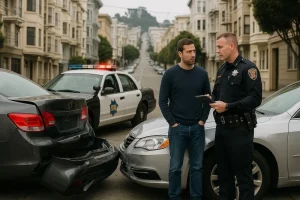
Calling law enforcement after an accident is important, especially in Sacramento where traffic conditions and road layouts can complicate fault analysis. Police reports provide an objective record of the scene, vehicle positions, weather conditions, and statements from involved parties.
However, officers may include summaries of what drivers say. That is another reason to keep your statements factual and limited. You can describe what you observed without assigning blame or apologizing.
Why Fault Matters So Much in Sacramento
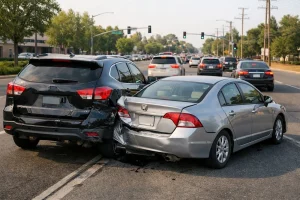
Sacramento’s roads present unique challenges. Heavy commuter traffic on I-5, I-80, Highway 50, and surface streets like Watt Avenue or Florin Road creates frequent rear end and multi vehicle collisions. In these situations, insurers often argue shared fault.
An apology in a rear end crash, for example, may be used to claim you were following too closely, even if the driver ahead stopped suddenly or cut in front of you. At busy intersections, a quick apology can be framed as admitting failure to yield, even when the other driver violated traffic laws.
How Apologies Affect Compensation
Fault directly affects compensation. If your medical bills, lost wages, and other damages total a significant amount, even a small shift in fault percentage can cost you thousands of dollars.
For instance, if you are found 20 percent at fault, your recovery is reduced by 20 percent. If an apology helps push that percentage higher, the financial impact grows. In some cases, insurers may deny claims entirely based on alleged admissions.
Recorded Calls and Follow Up Conversations
Many people avoid apologizing at the scene but make the mistake later. Insurance adjusters often call within days of the accident and ask friendly sounding questions. They may ask how you are feeling or what happened.
These calls are usually recorded. Saying “I’m sorry, I was just distracted that day” or similar phrases can be just as damaging as saying it at the scene. Before giving any recorded statement, it is wise to speak with a personal injury attorney.
How Phoong Law Protects Sacramento Drivers
At Phoong Law, we routinely see strong cases weakened by unnecessary statements. Our role is to protect clients from these pitfalls and present the facts accurately.
We handle communication with insurance companies so clients do not have to worry about saying the wrong thing. We gather evidence such as traffic camera footage, witness statements, vehicle data, and medical records to establish fault based on facts, not emotions.
By taking over early, we help ensure that a moment of politeness does not become a permanent legal problem.
What to Do Immediately After a Sacramento Crash
If you are involved in an accident, take these steps:
- Move to safety if possible and turn on hazard lights.
- Call 911 and request medical assistance if anyone is injured.
- Cooperate with law enforcement but keep statements factual.
- Take photos of vehicles, the roadway, traffic signals, and conditions.
- Exchange contact and insurance information.
- Seek medical care even if injuries seem minor.
- Contact Phoong Law, personal injury attorneys, before speaking with insurance adjusters.
These steps help preserve your rights and your ability to recover compensation.
Why Silence Can Be a Smart Choice
Silence does not mean being uncooperative. It means avoiding unnecessary commentary. You are allowed to focus on safety and documentation without engaging in conversations about fault.
Being calm and quiet protects you. Empathy can be shown through actions rather than words. Calling for help and checking on others demonstrates concern without legal risk.
Common Myths About Apologies and the Law
Many people believe that apologizing is legally harmless or that honesty requires admitting fault immediately. In reality, honesty means telling the truth when the facts are known. Right after an accident, those facts are rarely clear.
Another myth is that only written statements matter. Verbal comments, especially recorded ones, are just as important in insurance claims.
When to Call Phoong Law
If you were involved in a crash anywhere in Sacramento or the surrounding area, it is wise to speak with an attorney as soon as possible. This is especially true if:
- There were multiple vehicles involved.
- The other driver disputes what happened.
- You are experiencing pain or delayed symptoms.
- An insurance company has contacted you.
- You are unsure what to say or do next.
Call Phoong Law at (866) GOT-PAIN for a free consultation. We will review your situation, explain your options, and guide you through the next steps. You pay nothing unless we win your case.
Protect Yourself, Not the Other Driver’s Claim
Being polite should never cost you your rights. On Sacramento roads, where accidents are common and fault is often contested, words matter. A simple apology can be misunderstood and used against you long after the crash is over.
If you remember one thing after an accident, let it be this: focus on safety, document the scene, and get legal guidance before speaking freely. Phoong Law is here to help you protect your health, your finances, and your future.
Disclaimer: This blog post is for informational purposes only and does not constitute legal advice. Reading this article does not create an attorney-client relationship. For specific legal guidance regarding your accident or injuries, contact Phoong Law directly.

















 English
 Español de México